
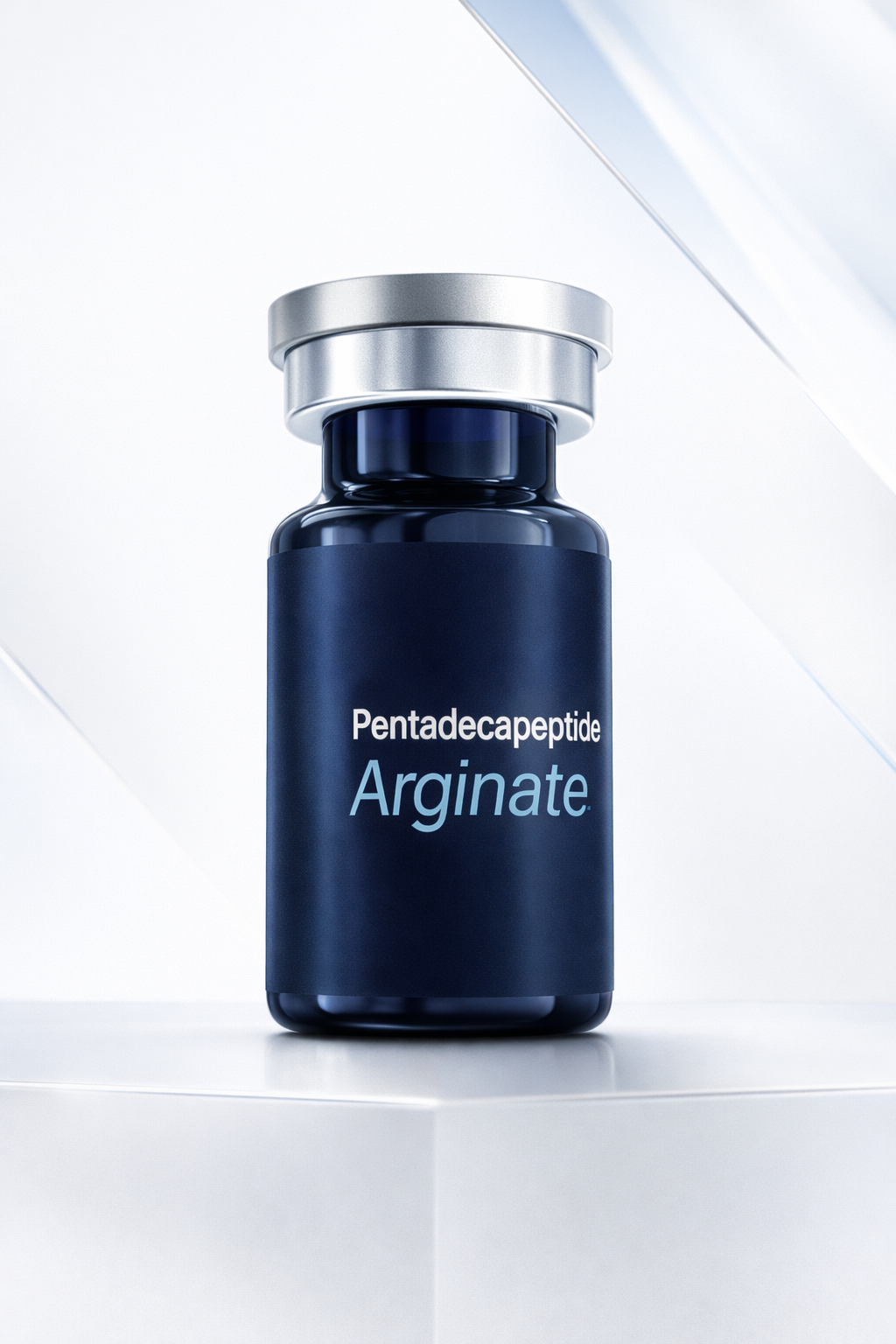
The Next Evolution in Regenerative Peptide Therapy
When it comes to advanced recovery and regenerative medicine, few compounds have generated as much interest as BPC-157. Known for its powerful effects on muscle, tendon, ligament, and gastrointestinal healing, BPC-157 has become a cornerstone in performance and regenerative protocols. Now, a next generation analog has emerged: Pentadecapeptide Arginate, a stabilized, enhanced version designed to improve bioavailability and systemic performance. This article breaks down how these peptides work, where they differ, and what current science suggests about their therapeutic potential.
What is BPC-157?
BPC-157 (Body Protection Compound-157) is a synthetic peptide derived from a naturally occurring protein found in gastric juice. Comprised of 15 amino acids, it plays a significant role in tissue repair and cellular regeneration. Preclinical research has shown that BPC-157 enhances angiogenesis (formation of new blood vessels), accelerates fibroblast migration (critical for tissue repair), and increases collagen synthesis. These mechanisms make it highly effective for healing connective tissue and reducing inflammation.
Key Research Findings
- Accelerated muscle and tendon healing (PubMed PMID: 24683403)
- Improved gastrointestinal integrity and reduced inflammation (PubMed PMID: 25887305)
- Neuroprotective and angiogenic effects in brain injury models (PubMed PMID: 23892568)
While human data is still limited, the consistency of preclinical findings has made BPC-157 one of the most widely used peptides in regenerative medicine.
Injectable BPC-157: Targeted Recovery
Injectable BPC-157 is typically administered near the site of injury, allowing for localized, high concentration effects. This approach is particularly effective for tendon and ligament injuries, muscle tears, joint inflammation, and post surgical recovery. By acting directly on endothelial and connective tissue cells, BPC-157 helps rebuild vascular networks and structural integrity at the injury site.
What is Pentadecapeptide Arginate?
Pentadecapeptide Arginate is an arginine stabilized form of BPC-157, engineered to improve stability, absorption, and systemic distribution. The addition of the arginate component protects the peptide from enzymatic breakdown, extends its circulation time, and enhances overall bioavailability. The result is a peptide that delivers more consistent, whole body regenerative effects rather than localized action alone.
Key Differences: Local vs. Systemic Repair
While both compounds activate similar regenerative pathways, their pharmacokinetics and clinical applications differ.
BPC-157
- Rapid, localized action
- Ideal for targeted injury repair
- Strong effects on nitric oxide signaling and growth factors at the injection site
Pentadecapeptide Arginate - Extended stability and systemic distribution
- Better suited for diffuse inflammation or multiple injury sites
- Provides more consistent plasma levels and whole body recovery support
Research suggests BPC-157 interacts with the nitric oxide (NO) pathway, helping regulate angiogenesis and inflammation (PubMed PMID: 19213273). The arginate form may enhance these effects by improving delivery and duration.
Potential Benefits of Pentadecapeptide Arginate
- Accelerates muscle, tendon, and ligament repair
- Reduces systemic inflammation and oxidative stress (TNF-α, IL-6)
- Enhances angiogenesis and collagen production
- Supports full body recovery and resilience
- Well tolerated with minimal injection site irritation
In Simple Terms
BPC-157 is the original “healing peptide”, fast, targeted, and highly effective for acute injuries. Pentadecapeptide Arginate represents the next evolution, more stable, more bioavailable, and better suited for systemic recovery and long term optimization. Both play a valuable role in modern regenerative medicine, but the arginate form offers a more consistent and comprehensive approach for patients dealing with widespread inflammation or multiple recovery demands.
Clinical Perspective
While human clinical trials are still emerging, the existing body of preclinical research is compelling. These peptides sit at the intersection of performance medicine, injury recovery, and longevity optimization. As with any advanced therapy, treatment should be guided by a qualified medical provider with experience in peptide protocols.
References:
BPC-157 and Tendon Healing (PubMed 21030672)
Gastrointestinal protection by BPC-157 (PubMed 25887305)

0 Comments